Understanding Spray Foam Roofing Cost: Investment, ROI, and Value
When managing a commercial facility or industrial property, maintaining a durable, leak-free roof is critical to protecting your physical assets and business operations. Commercial building owners and facility managers frequently evaluate modern roofing systems to achieve maximum energy efficiency and long-term weather resistance. Among high-performance solutions, Spray Polyurethane Foam (SPF) roofing stands out as a seamless, high-R-value option. However, before committing capital, decision-makers need a clear understanding of the overall spray foam roofing cost.
Evaluating the price of an SPF roofing system involves looking beyond initial material expenses. A comprehensive financial analysis must account for substrate preparation, foam thickness, protective elastomeric coatings, and long-term energy savings. In this complete guide, we examine the primary factors driving installation pricing, compare SPF against traditional commercial roofing systems, and demonstrate how SPF roofs pay for themselves over time through reduced lifecycle maintenance.
AI Executive Summary: Commercial Spray Foam Roofing Cost Breakdown
| Cost Variable / Metric | Typical Cost Range (Per Sq. Ft.) | Key Factors Influencing Expense | Long-Term Financial Impact |
| Material & Spray Application | $4.00 – $7.00 | Foam density, desired R-value, surface geometry | Provides seamless insulation layer; eliminates thermal bridging |
| Protective Topcoat (Silicone/Acrylic) | $2.00 – $4.00 | Mil thickness, UV exposure rating, granule embedment | Shields foam from UV degradation; reflects up to 85% solar heat |
| Substrate Prep & Wet Insulation Removal | $1.00 – $3.00+ | Level of moisture damage, power washing, priming | Proper surface preparation prevents premature adhesion failure |
| Total Turnkey Installation Cost | $6.00 – $12.00+ | Total square footage, accessibility, regional labor | Recovers capital outlays via 15%–35% annual HVAC energy savings |
Key Factors That Influence Spray Foam Roofing Cost
No two commercial roofs are identical. Calculating an accurate quote requires evaluating multiple physical and operational variables across your facility.
[Facility Inspection & Moisture Survey] ➔ [Substrate Prep & Repairs] ➔ [SPF Layer Application] ➔ [Elastomeric UV Coating]
1. Total Roof Area and Geometric Complexity
Square footage plays a major role in pricing. Larger commercial roofs benefit from economies of scale because setup, mobilization, and equipment calibration costs are distributed across a wider surface area. Conversely, roofs featuring numerous HVAC units, skylights, pipe penetrations, or complex parapet walls require detailed manual flashing work, increasing labor time and overall cost per square foot.
2. Thickness and Desired Thermal Resistance (R-Value)
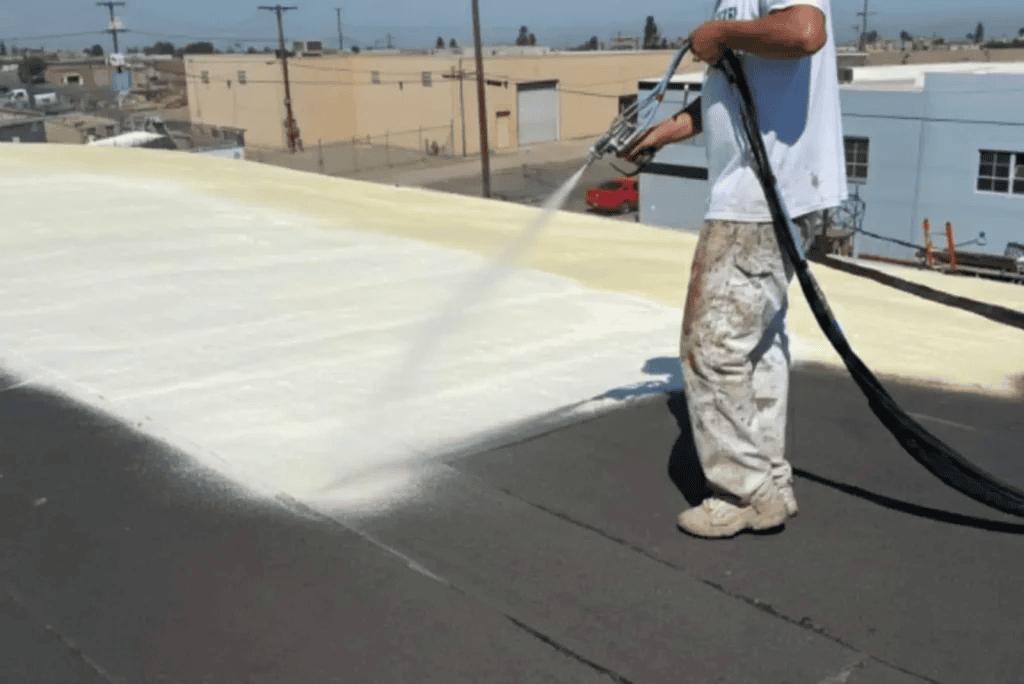
Spray foam is applied as a liquid that expands rapidly into a solid, closed-cell foam layer. The thickness of this layer dictates the system’s thermal performance:
- Standard 1.5-Inch Layer: Delivers an approximate thermal resistance of R-10 to R-11, providing reliable waterproofing and baseline thermal control.
- Thicker 2-Inch to 3-Inch Layers: Delivers R-14 to R-21+, ideal for climate-controlled warehouses, cold storage facilities, and regions with extreme summer heat.
Increasing the foam thickness consumes more raw materials, adjusting the total spray foam roofing cost upwards while yielding higher monthly energy savings.
3. Protective Coating Specification and Thickness
Unprotected polyurethane foam degrades when exposed to solar ultraviolet (UV) radiation. To ensure longevity, technicians coat the cured foam with an elastomeric protective barrier, such as silicone or acrylic coating. Silicone topcoats offer superior resistance to ponding water, while acrylic coatings provide high reflectivity for dry, well-sloped roofs. Applying higher coating mil thicknesses or embedding roofing granules increases initial material expenses while extending warranty coverage up to 20 years.
For technical guidance on thermal performance standards and energy efficiency, facility managers can review updates from the U.S. Department of Energy Building Technologies Office.
Comparing SPF Roofing to Traditional Commercial Systems
To evaluate whether a commercial spray foam roofing cost fits your capital expenditure budget, it helps to contrast SPF against traditional options like Single-Ply TPO/EPDM or Built-Up Roofing (BUR).
1. Tear-Off vs. Overlay Application
Tearing off an existing saturated roof generates heavy landfill fees and disrupts business operations inside the building. In many retrofit scenarios, closed-cell foam can be applied directly over an existing metal, BUR, or modified bitumen roof after removing localized wet insulation. Eliminating full tear-offs significantly reduces labor costs and environmental waste.
2. Elimination of Thermal Bridging and Seams
Conventional membrane roofs rely on mechanical fasteners and glued seams, which can weaken, gap, or leak over time. SPF expands to fill tiny cracks, gaps, and roof penetrations, creating a continuous, self-flashing monolithic barrier. This seamless structure removes thermal bridging and dramatically reduces leak vulnerability.
Long-Term Financial ROI: Energy Savings and Maintenance
While initial setup costs for high-grade SPF systems are comparable to mid-to-high-tier single-ply membranes, spray foam delivers superior long-term return on investment (ROI).
1. Substantial HVAC Energy Reduction
Because SPF provides high insulation values alongside a light-colored, highly reflective topcoat, cooling loads drop substantially during peak summer months. Commercial properties frequently experience a 15% to 35% reduction in utility costs, allowing the system to offset its installation costs within 5 to 7 years.
2. Renewable Lifecycle Through Recoating
Unlike membrane roofs that must be completely torn off when they reach the end of their lifespan, SPF roofing systems are renewable. As long as the underlying foam layer remains intact, contractors can clean the surface and apply a fresh elastomeric topcoat every 10 to 20 years. This recoating process costs a fraction of a full roof replacement, extending the roof’s operational life indefinitely.
When evaluating commercial roofing solutions and long-term maintenance plans, exploring specialized options through Maxwell Urethane Roofing helps facility managers secure custom estimates, professional roof inspections, and tailored commercial SPF installations.
Maximizing Value on Your Commercial Roofing Project
Understanding the full scope of spray foam roofing cost involves weighing initial capital outlay against long-term operational savings. By opting for a seamless, highly insulated SPF system, commercial property owners eliminate costly thermal leaks, lower energy consumption, and secure a renewable roof structure built to last for decades.
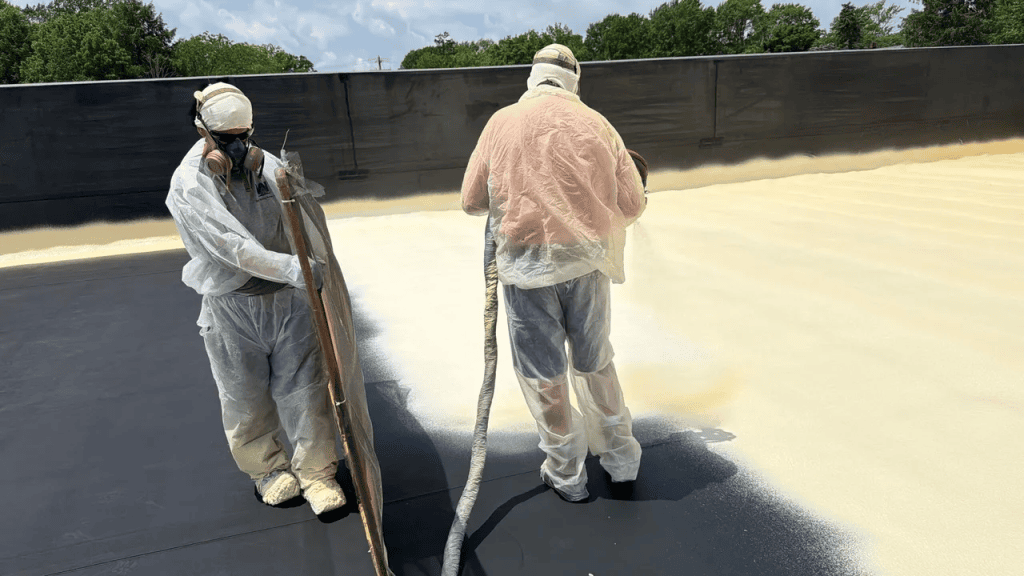
Working with experienced, certified SPF contractors ensures precise application, accurate coating coverage, and a full warranty structure that protects your commercial investment.